
WELCOME BONUS 300%
UP TO €2000 + 100
FREE SPINS
UP TO €2000 + 100
FREE SPINS
Home → Blackjack
Blackjack at A Big Candy Casino: Variants, Rules and Payouts
What Hole Card Means at a Live Table
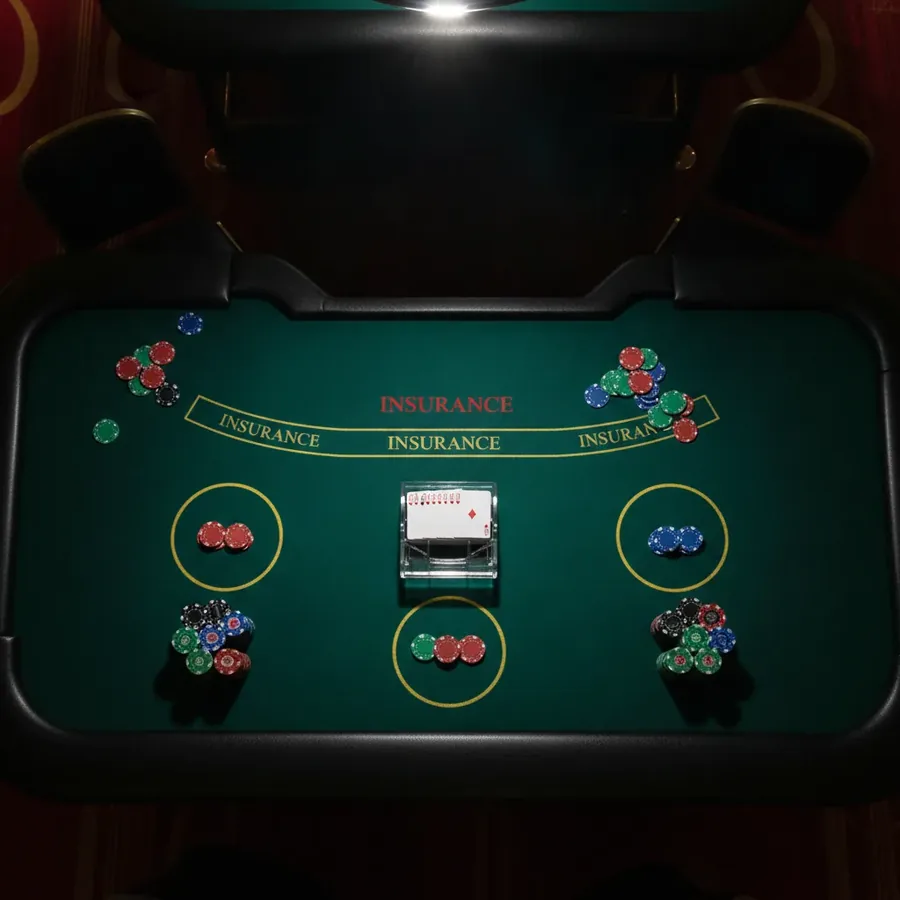
At live blackjack tables like Quantum Blackjack Plus Live by Playtech, the dealer reveals one card face up, known as the 'upcard', and keeps another card face down, the 'hole card'. This hole card is crucial as it determines the dealer's next move and the potential outcome of the player's hand. For instance, if the upcard is a 10 and the hole card is an Ace, the dealer has a blackjack, immediately ending the round.
Understanding the potential value of the hole card is fundamental to making informed decisions, especially with side bets like those offered in Infinite Blackjack by Evolution. While the RTP for Infinite Blackjack is 99.47%, the presence of side bets such as Any Pair or Bust It introduces different risk profiles based on the dealer's potential hole card. These side bets can offer payouts up to 1,000x on certain combinations, but are heavily influenced by the unknown hole card.
The strategy for dealing with the hole card varies significantly. In Blackjack Insurance, a side bet where players can wager up to 50% of their main bet if the dealer has an Ace, the house edge is a substantial 7.47%. This high house edge is largely due to the uncertainty of the hole card, and basic strategy dictates always rejecting this bet unless card counting is employed at a true count of +3 or higher.
No Double Down on three cards
Certain blackjack variants at AbigCandyCasino restrict the ability to double down after receiving three cards. For example, in a standard Blackjack 6 Decks game with S17 and DAS rules, doubling down is permitted on any two cards. However, if a player chooses to hit and receives a third card, the option to double their bet is typically forfeited in many rule sets.
This restriction impacts the player's ability to capitalize on advantageous situations. The Blackjack Liberal Vegas Strip variant, with an RTP of 99.72%, allows doubling down on any two cards. If the game rules prohibit doubling down after taking a third card, a player might miss an opportunity to double their winnings when they have a strong starting hand and have drawn a favourable third card.
The consequence of not being able to double down on three cards is a slight increase in the house edge. While not as significant as other rule variations, it reduces the player's strategic options. For a player aiming to maintain the lowest possible house advantage, such as the 0.15% in Blackjack Ein Deck with classic rules, understanding these limitations on doubling down is essential for optimal play.
Four hours of play with 300 EUR bankroll
With a bankroll of 300 EUR, engaging in four hours of play requires careful management, especially when considering the game's contribution to bonus wagering. Tischspiele (table games) at AbigCandyCasino contribute only 10% towards the wagering requirements of bonuses, unlike slots which contribute 100%. This means a larger portion of the bankroll needs to be allocated to table games to meet the turnover for a 300% welcome bonus up to €2,000.
The wagering requirement for a €2,000 bonus at a 10% contribution rate from table games would necessitate a significant amount of play. For example, to wager the full €2,000 bonus, a player would need to place €20,000 in bets on table games (€2,000 bonus x 10 = €20,000). Over four hours, this translates to an average bet of approximately €13.89 per hour, assuming continuous play.
Considering the house edge and typical bet sizes, a 300 EUR bankroll might be depleted quickly if not managed prudently. For instance, if a player wagers 5 EUR per hand at a blackjack table with a 0.46% house edge (as seen in Blackjack 6 Decks, S17, DAS), they could theoretically lose 0.023 EUR per hand on average. Over four hours, this could amount to a substantial portion of the initial bankroll depending on the number of hands played.
Which hands are excluded from Surrender?
The Late Surrender option, which allows a player to forfeit half their stake after the dealer checks for blackjack, is not universally available on all hands. This rule, which can improve RTP by approximately 0.08 percentage points, is typically only offered on the player's initial two cards before any further action is taken.
Hands where a player has already split their cards or doubled down are generally excluded from the Surrender option. For example, in Blackjack Split / Double rules, once a player opts to split Aces or double their initial bet, the decision is final, and they cannot later choose to surrender that hand, even if it becomes disadvantageous.
The exclusion of certain hands from surrender impacts strategic flexibility. While Late Surrender is beneficial, especially against a dealer's strong upcard, it cannot be applied to hands that have been modified through splitting or doubling. For instance, if a player splits a pair of 8s and draws a 3 on one hand, making it 11, they may still wish to surrender if their other split hand deteriorates, but this option would be unavailable.
Bonus Lost Due to 10 Percent Contribution
The welcome bonus of 300% up to €2,000, coupled with 100 free spins, can be significantly impacted by the 10% contribution rate of table games towards wagering requirements. This means only a fraction of bets placed on games like Blackjack Ein Deck or Quantum Blackjack Plus Live counts towards clearing the bonus, effectively multiplying the required turnover.
To fully meet the wagering for the maximum €2,000 bonus at a 10% contribution rate, a player would need to wager €20,000 (calculated as €2,000 bonus amount x 10). If a player primarily plays table games, they would need to bet a total of €200,000 to achieve this turnover, significantly increasing the time and risk involved compared to slots.
This low contribution rate can lead to a player effectively losing their bonus if they cannot meet the substantial wagering demands within the given timeframe. For example, if a player only plays blackjack, which contributes 10%, they might find it impossible to wager the necessary amount to unlock the bonus funds, thereby forfeiting the €2,000 potential winnings and the initial bonus itself.
Blackjack variants at a glance
| Variant | Payout | House edge | Rule | Bet range |
|---|---|---|---|---|
| Blackjack Surrender (Late Surrender) – Regel-Effekt | n.a. (Regel-Modifikator) | −0.08 Prozentpunkte | Spieler gibt Hand nach Dealer-Blackjack-Prüfung auf, verliert die Hälfte des Einsatzes. Verbessert RTP um ca. 0.08 Prozentpunkte. Early Surrender ist wesentlich wertvoller (bis −0.6 Prozentpunkte), aber extrem selten. | Rückzahlung 50% des Einsatzes |
| Blackjack Auszahlung 6:5 statt 3:2 (6 Decks) | 98.15% | 1.85% | Ersatz von 3:2 durch 6:5 fügt exakt +1.39 Prozentpunkte zum Vorteil des Casinos hinzu – stärker als jede andere Regeländerung. Bei $10 Einsatz zahlt Blackjack $12 statt $15. | Blackjack 6:5, Gewinn 1:1 |
| Blackjack Split / Double / H17 – Regel-Effekte | n.a. (Regel-Modifikatoren) | H17 +0.22 Prozentpunkte; RSA −0.08 Prozentpunkte; DAS −0.14 Prozentpunkte | Dealer Hits Soft 17 verschlechtert RTP um 0.22 Prozentpunkte; Resplit Aces verbessert um 0.08 Prozentpunkte; Double After Split verbessert um ca. 0.14 Prozentpunkte; 6 Decks statt 8 – ca. 0.02 Prozentpunkte. | Double – Einsatz ×2 mit einer Karte; Split – bis 4 Hände; Ass-Split meist mit einer Karte. |
| Blackjack Insurance / Versicherung (6–8 Decks) | 92.53% | 7.47% | Separate Nebenwette bis 50% der Hauptwette, wenn der Dealer ein Ass hat. Basisstrategie schreibt IMMER Ablehnung vor (außer Karten zählen bei True Count ≥ +3). Bei einem Deck Vorteil ≈ 5.88% | Insurance 2:1 |
| Blackjack Liberal Vegas Strip (liberale Regeln, 3:2) | 99.72% | 0.28% | Günstigste Regelkombination: S17 + DAS + Resplit + Late Surrender. Standardabweichung 1,15 | Blackjack 3:2, Gewinn 1:1 |
| Blackjack 6 Decks, S17, DAS, DOA, Auszahlung 3:2, Basisstrategie | 99.54% | 0.46% | Dealer steht auf Soft 17; Verdopplung auf jeder Zweierkarte; Verdopplung nach Split erlaubt; keine Aufgabe. Basisstrategie ist für diesen Wert zwingend | Blackjack 3:2, normaler Gewinn 1:1, Insurance 2:1 |
Splitting costs double bet: plan budget
Splitting a hand in Blackjack, such as in Blackjack Split / Double / H17, allows a player to turn one hand into two, but this action effectively doubles the bet for that round. When a player chooses to split, their original wager is duplicated for the new hand, meaning a 10 EUR bet becomes 20 EUR in play across both hands. This requires careful budget management, especially for players utilizing a basic strategy.
The rules of Blackjack Split / Double / H17 allow for actions like Double (betting twice the initial stake with one additional card) and Split (dividing a pair into up to four hands). While splitting Aces is usually restricted to one card, other splits permit further action, potentially increasing exposure significantly. Understanding these rules is crucial for managing the increased financial commitment per round.
For example, a player betting 50 EUR might choose to split a pair of Aces. This immediately commits another 50 EUR, bringing their total wager for that turn to 100 EUR. This doubling of the bet per split hand necessitates a larger bankroll to sustain gameplay, especially if multiple splits occur within a single session.
Register Late Surrender correctly in three steps
Late Surrender is a rule in Blackjack that allows a player to forfeit their hand after the dealer checks for Blackjack, losing half of their original bet. This option can improve the Return to Player (RTP) by approximately 0.08 percentage points compared to not having the option. The decision to surrender should be made strategically based on the player's hand and the dealer's upcard.
When implementing Late Surrender, the first step involves understanding the condition for its availability: it can only be exercised after the dealer has checked for a Blackjack. This is distinct from 'Early Surrender', which is much rarer but offers a greater RTP improvement of up to 0.6 percentage points. The rule specifies that the player loses 50% of their stake.
The consequence of using Late Surrender on a 100 EUR bet is the loss of 50 EUR, with the remaining 50 EUR returned to the player. This rule is a tactical choice to mitigate losses in unfavorable situations, and its correct application, as per the rules of Blackjack Surrender (Late Surrender), can contribute to maintaining a higher RTP in the long run.
Blackjack doesn't count for every bonus offer
The 300% welcome bonus up to €2,000 plus 100 free spins comes with specific wagering requirements, and table games like Blackjack often contribute less towards these requirements than slots. While slots contribute 100% to bonus turnover, Blackjack games typically only contribute 10%. This means players must wager significantly more on Blackjack to clear the bonus.
For instance, to meet a wagering requirement of €4,000 based on a €100 bonus, a player betting on slots would only need to wager €4,000. However, a player focusing on Blackjack, with its 10% contribution, would need to wager €40,000 (€4,000 / 10% = €40,000) to achieve the same turnover. This significantly extends the time and amount wagered.
This disparity in contribution rates means that while Blackjack games are available at AbigCandyCasino, they are not the most efficient path for clearing bonus funds. Players aiming to maximize their bonus value should prioritize slot games, as they count fully towards the bonus turnover, unlike the 10% contribution rate for table games like Blackjack.
When does the table max bet apply?
The maximum bet for live casino tables at AbigCandyCasino varies by game and provider. For Quantum Blackjack Plus Live, the bet range is from 1 EUR to 5,000 EUR, offering a high limit for players. This upper limit is a crucial factor for high rollers to consider when planning their betting strategy within a session.
Similarly, Infinite Blackjack, also from Evolution, shares the same bet range of 1 EUR to 5,000 EUR per hand. These limits are in place to manage risk for both the casino and the players, ensuring that no single bet can excessively deplete a player's bankroll or pose an unmanageable risk to the operator.
Blackjack Party, another Evolution offering, has a slightly lower maximum bet of 1,000 EUR, though it still allows for substantial wagers. Understanding these distinct table limits is essential for players to select a table that aligns with their intended betting strategy and budget, ensuring they can play within their planned financial parameters.
Live Table vs RNG Table: Speed and Limits
Live Blackjack tables, such as Quantum Blackjack Plus Live by Playtech, offer a more immersive experience with bets ranging from 1 EUR to 5,000 EUR. These tables often feature real dealers and can provide a different pace of play compared to their Random Number Generator (RNG) counterparts, with specific limits designed for this live environment.
In contrast, RNG tables, like Blackjack 6 Decks with a 99.54% RTP and a 0.46% house edge, typically offer faster gameplay because they do not involve human dealers or the same physical card shuffling processes. While limits can be comparable, the interaction and speed differ significantly, with RNG versions often allowing for more hands per hour.
The choice between a live table and an RNG table can significantly impact the speed at which players can complete wagering requirements for bonuses. For example, a player needing to wager €4,000 could potentially achieve this much faster on an RNG table due to its higher hand frequency, compared to a live table like Blackjack Party which has a 1,000 EUR max bet.
One Deck vs Eight Decks in House Edge
Playing Blackjack with a single deck offers a significantly lower house edge compared to games using eight decks. A single deck variation, with classic rules and a 3:2 payout, presents an RTP of 99.85%, meaning a house edge of just 0.15%. This is a reduction of approximately 0.48 percentage points when compared to an eight-deck game.
The difference in the number of decks directly impacts the house's advantage. For instance, a Blackjack game with six decks, S17, DAS, DOA, and a 3:2 payout boasts an RTP of 99.54%, resulting in a 0.46% house edge. This demonstrates that fewer decks generally translate to a more favourable game for the player.
A reduction in decks, such as moving from eight to six, can shave off a small percentage from the house advantage. While the exact figure is minor, around 0.02 percentage points, it contributes to a slightly better RTP. This highlights the importance of checking the number of decks used in any blackjack variant.
Soft Hand and Hard Hand Practically Distinguished
In Blackjack, a 'soft' hand is one that includes an Ace counted as 11, offering flexibility in its value. For example, a hand with an Ace and a 6 is a soft 17. If the player draws another card, say a 4, the hand becomes hard 11 (11 + 4), as counting the Ace as 11 would result in a bust (11 + 4 + 11 = 26).
Conversely, a 'hard' hand is one where no Ace is present, or if an Ace is present, it must be counted as 1 to avoid busting. For instance, a hand of 10 and 7 is a hard 17. If a player holding a hard 17 draws a 5, the total becomes 22, which is a bust.
Understanding the distinction between soft and hard hands is crucial for applying basic strategy. For example, the rule 'Dealer Hits Soft 17' (H17) increases the house edge by 0.22 percentage points. This rule means the dealer must draw another card on a soft 17, potentially improving their hand or busting.
What doesn't count as Blackjack after Split?
When a player splits a pair of Aces in Blackjack, the resulting hands often have specific limitations. Typically, a split Ace, when followed by a 10-value card, does not qualify as a natural Blackjack. This means it is treated as a score of 21, not an immediate win at higher odds.
The rule regarding split Aces can impact the payout structure. For instance, if a player splits two Aces and receives a 10 on one of the hands, the score is 21. However, this 21 is usually paid at even money (1:1) rather than the standard 3:2 Blackjack payout.
This specific rule, where a 21 formed after a split, particularly with Aces, does not count as a natural Blackjack, is a common house edge mechanic. It is distinct from a standard Blackjack achieved with the initial two cards, which pays 3:2.
Even Money only possible with Dealer Ace
The 'Even Money' option in Blackjack is a side bet offered when the dealer's upcard is an Ace. This bet allows the player to receive a 1:1 payout on their initial bet if the dealer has Blackjack, without waiting for the hand to conclude.
This option is effectively a form of insurance against the dealer getting a Blackjack. If the dealer does not have Blackjack, the player loses the Even Money bet, and the game proceeds as normal with the player's hand.
While the 'Insurance' side bet also pays 2:1, it is a separate wager on whether the dealer has Blackjack. Even Money is directly tied to the player's original bet and is only offered when the dealer's upcard is an Ace.
Insurance Pays 2:1 Yet Still Costs Money
The Blackjack Insurance side bet, which pays 2:1, can be tempting but generally offers poor value to the player. This bet is placed when the dealer's upcard is an Ace, essentially wagering on whether the dealer will have a Blackjack.
Despite the 2:1 payout, the house edge on the Insurance bet is substantial, reaching 7.47% for games using six to eight decks. Only card counters with a True Count of +3 or higher might find value in this bet, as per basic strategy which always advises against it.
For a player following basic strategy, consistently taking Insurance will lead to a long-term decrease in their overall return. The high house advantage means that, on average, players lose more on this side bet than they win over time, thus costing them money.
Contact
Live - online chat
Banking





Providers












A Big Candy Casino 2026